Brain Advance

A dear friend sent me this video:

I haven’t talked to her and I don’t really know anything about this program. But I thought I’d post it for a couple of reasons:

1. I love how she talks about never believing what doctors tell you, and how she encourages parents to never give up

2. She has an integrative approach, including nutrition, supplements, and other forms of alternative therapies and creates a treatment plan that seems effective.

If anyone knows anything about this program, please share! Their website is www.brainadvance.org. I read through some of their info and I must admit it sounds interesting. We’ve done auditory integration with Nathan and I’ve looked at bio/neurofeedback for a while. She seems to be integrating a few things and in my opinion, approaching the brain through several avenues is always a good idea!

Will I take Nathan? No, not right away. We are focusing on Medek now. But maybe later? Who knows?
Pics

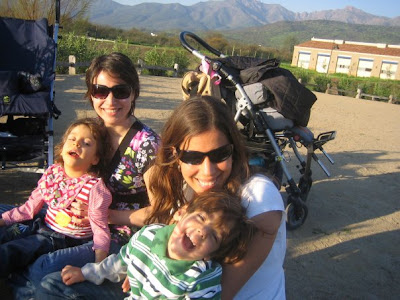
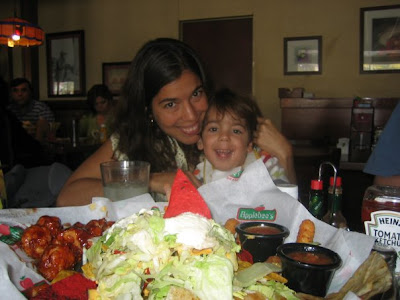
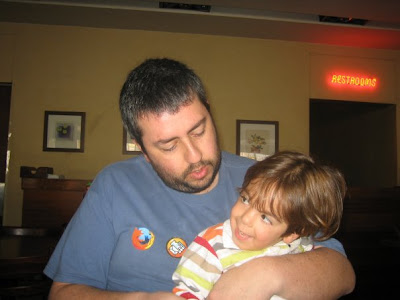
Just a couple that I grabbed from MamaTerapeuta’s facebook:

From Santiago

Lunch on Saturday

From Santiago

This is PapaTerapeuta

From Santiago

At Colina (a lake)

Return on Investment

ROI is something that is highly discussed in the business world, but you hardly ever hear this word in the special needs world. In my opinion, this is a big mistake. ROI needs to be as common to our vocabulary as the words “therapy” or “progress.”

In the business world, few actions are made without a thorough evaluation of ROI. If we spend $1000 in advertising, will the results bring increased revenue? For every dollar invested, how much will be made? If a machine is puchased, how will it improve the company? Will it increase revenue by saving time? By increasing production? By producing a product that can be sold for X amount of dollars? Sometimes the results are very specific and can be pinpointed to the exact dollar. For every $1 dollar invested, $5 will be earned. Other times, there are only vague projections and it is impossible to pinpoint specific numbers.

Stay with me. I know must of us don’t like thinking about business but I think it’s important to make this connection. Because we in the special needs world are the most taxed for resources – money, time, energy. So EVERYTHING needs to be evaluated from the point of view of ROI.

In this blog I have talked about a lot of different therapeutic modalities. There are literally a MILLION ways of spending your resources (Time, Energy, Money). There are different therapies targeting different developmental aspects, nutritional supplements, organic foods, equipment, lots of different types of assistance. So how do you choose?

I figured I’d write down some of the things I consider when trying to make decisions.

* Free is never really free. Many people go to traditional therapies because they are free (paid for by the state or federal government) or covered by insurance. What we don’t realize is that these therapies have a heavy cost in time and energy. Energy for the parents in getting to the therapies, energy expended by the child, and time. Not just the time spent in the therapy, but the time (months, years) lost if the therapy is not effective. So before you do something because it is free, think again. What is the REAL cost? I can assure you, it’s MUCH greater than most of us realize.

* Is is sustainable? What can offer the maximum impact for the least amount of resources? For example, there may be a therapist that is AMAZING but is extremely costly, requires a lot of TEM, and is very difficult to incorporate. So although taking your child there would be the best, is it really? Would it be better perhaps to settle for someone who is slightly less effective but more sustainable?

* By choosing a program, what do you have to leave out? There are many therapies out there that offer home programs. These can range from being VERY time consuming and demanding, to minimally demanding. Whenever you are doing a therapy with a home program, you have to be clear about what you’re leaving out in order to implement the home program. Perhaps this home program can improve cognition, but what are the costs for the child’s motor development? Or vice versa?

* How does the program affect the rest of the family? There are so many stories about how siblings are affected by having a special needs child in the family. Jodi Picoult has written a couple of books that delve on this topic and are worth reading. I think it’s really important to consider this!

* What is the cost of function vs happiness? Perhaps a therapy can provide improved function but at what cost to the emotional state of the child? And what about long terms vs short term happiness? Perhaps short term unhappiness leads to long term function and happiness, but how/where do you draw the line? How do you know that the program is going to yield long term gains?

I know more than anything these are just questions to be considered. And there are many many more. But I figured it would be helpful to raise some of the issues.

Me, personally, when I analyze a therapy, I try to look at the following:

* What is the cost of this therapy vs others?
* What is the best case outcome of this therapy and the worst case outcome?
* If all we get is the worst case outcome, will I have felt that the investment was worthwhile?
* What am I leaving out if I do this therapy with Nathan?
* How will this affect his emotional well being? What about mine and Owen’s well being?
* If I don’t do this program, will I always wonder and feel that I left a stone unturned?

Obviously, I have made many poor choices in the last 3 years. In wanting to do too much I don’t do enough of anything. Mainly because I didn’t have a whole lot of clarity about the points mentioned above. Lately I have thought a lot about this and am a lot more conscientious of these issues when making decisions. Which is why I didn’t send Nathan to the state preschool. The ROI just wasn’t there. Which is why we are here in Santiago Chile doing Medek. The ROI looks favorable to me.

Generally, I am also trying to pick ONE thing/doctor/therapy/practitioner in each category and stick to it:

* Physical development: Medek
* Biochemistry: Dr. Kenny
* Nutrition: Organic foods and GFCF diet
* Supplements: those focusing on brain development
* Speech development: Dynavox
* Exercise: swimming in the pool
* Structure: Rolfing (and soon to resume ABR)
* Overall health: BodyTalk

I am still missing a few components but in general, we are getting closer and closer to having a STAR team and program for Nathan!

Now here’s the twist. We have tried so much: stem cells, auditory integration, CME Medek, traditional PT, OT, ST, DT, ABR, AIAHP/REACH, suit therapy, and more.

Can I honestly say that Nathan has made significan gains from all of these things? Nathan still can’t hold up his head, roll, sit on his own, or speak. He has minimal control of his body and minimal use of his hands. But what I can say is that he hasn’t regressed. He is very very healthy. His cognition and understanding seems better. He seems more responsive and aware when I talk to him and recognizes more and more words and objects. He can now bear weight on his legs and squat to stand with balance support. He has decent head control when he is excited. He hasn’t been hospitalized since Dec 2006. He hasn’t needed any surgeries other than the shunt. He eats quite well orally. He can drink decently from a cup. He is alert and interactive and happy and funny. Is this sufficient ROI for the amount of time, energy, and money that we have spent on Nathan’s rehabilitation? ABSOLUTELY! I am grateful for everything Nathan has going for him. Would I like more? Sure! That’s why I am more selective now about ROI.

Anyways, I know this is something every special needs parent has considered but this is rarely talked about, so I thought I’d bring it to light and hopefully start a discussion! I hope to hear what other parents think about this!